
Enshitification - Book Review & Comments
It's so much worse than you can imagine

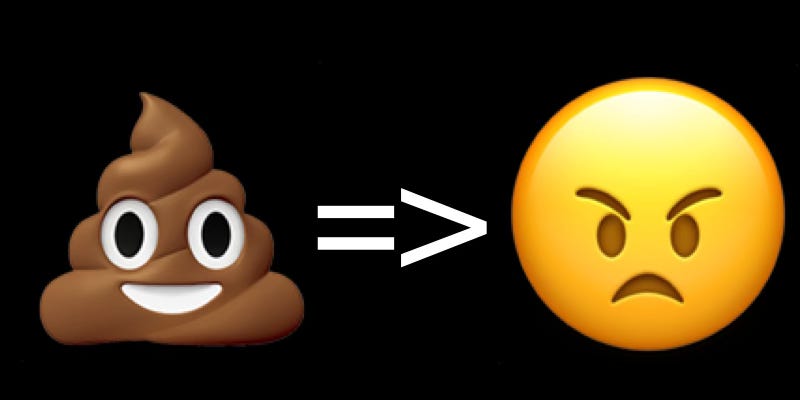
Cory Doctorow is a Canadian-British blogger, journalist, and science fiction author. He coined the word enshitification to describe the process that occurs when a business offers a valuable service to consumers, then changes it to service paying businesses, and finally alters the deal to enrich stockholders, while abusing consumers and businesses alike. Cory Doctorow’s blog can be found here. He has just published a book titled Enshitification, and is on an extended tour promoting it.
Enshitification describes, in a single novel word, the process by which a useful product is carefully corrupted into a tool to capture customers, abuse them in myriad ways, while extracting the maximum amount of profit from them. The process, as described in the book, has four steps:
Develop a platform that is useful and good to its users. Examples include Facebook, Twitter, and Amazon.
Monetize the platform, while keeping it free for users. This is done through selling advertising to, or in the case of Amazon selling products for business customers. Optimize for business, while abusing the customer base.
Abuse the business customers by clawing back as much as possible of the value they get from using the platform.
Refine and repeat until the platform becomes a physical manifestation of the grinning icon above.
Examples of the process start with a case study on Facebook. At the time of its inception, the primary social medium was MySpace. Mark Zuckerberg started Facebook in his dorm room at Harvard as a way for he and his creepy cronies to evaluate the attractiveness of undergrads. It wasn’t a great beginning, but the early users quickly adopted it to promote themselves and make connections. It was addictive and spread, the ideal conditions for a network.
Flush with investor cash, Zuckerberg made a pitch to MySpace users that included the statement “Come to Facebook, where we will never spy on you.” Of course this is laughable, now that we are aware that Facebook knows far more about its users than any of us are comfortable with.
Doctorow goes into meticulous detail examining all the techniques used to make both users and businesses captive, while continually reducing the benefits they have come to rely on. It’s fascinating and infuriating at the same time.
Other case studies are included for Amazon, Apple (iPhone), and Twitter. These alone justify the purchase of the book. It’s like reading a murder mystery, where there are multiple clues all pointing to the perpetrators. But unlike the traditional mystery, the guilty parties escape justice due to their elaborate structures to insulate themselves from legal proceedings. These studies themselves are great reading, but I’ll leave them for you to enjoy in the book.
Digital Rights

Readers familiar with Cory Doctorow will know that he is a champion fighting against Digital Rights Management (DRM). This appeared when Amazon began selling e-books that you could download and read on their Kindle device. Each book is encoded so that it can only be read on the Kindle, which is now also available as an app on phones and tablets. OK, fine, who cares?
Well for openers, Amazon has the ability to go into your device and remove a book that you’ve bought and paid for. You won’t get a refund, you simply will not be able to read that book again on your device. This also applies to leaving the Amazon fold. If you give up your membership, you lose all your purchased books. Hopefully your local public library has hard copies! But this was only the beginning.
Back in 1997 a company called Audible began to offering a reader that would allow books to be listened to, instead of read. Initially you had to use their device to play a book, but that evolved into apps for other devices. As with the Kindle, only Audible devices and apps could be used to listen to books, and you had to have a membership to get new books. The Audible service was a great deal for commuters and long haul truckers that no longer had to rely on whatever was available on the radio.
Predictably the success of Audible was noted by Amazon, and they bought the company. Every item in the catalog is protected by DRM. Leave Audible (Amazon) and you lose everything you bought.
Given the abundance of highly skilled computer hackers, you might expect that they would come up with many ways to defeat this lock-in. To prevent that the Digital Millennium Copyright Act (DMCA) was enacted. It criminalizes any and all attempts to circumvent copy protection, with staggering penalties including jail time and massive fines.
The DMCA was a massive gift, not just to publishers, but to manufacturers as well. Apple, for example, imprints every chip it makes with a tiny Apple logo. The reason behind this is to establish a trademark. Recyclers in third world countries disassemble discarded electronics to harvest chips to be sold to repair centers. When those parts enter the United States it can be claimed that there is a trademark violation, which could cause Apple’s reputation to be damaged if the chips do not perform as expected when used in a repair by a third party. This allows them to block the import.
Many manufacturers use the DMCA to prevent anyone outside of their company from doing any repairs. Farmers, for example, cannot repair a tractor without getting an agent of the manufacturer to unlock the embedded software, for a substantial charge. Parts must be obtained only from the manufacturer, and may be installed only by a company representative. Enforcement of this policy is managed by software that keeps the tractor connected to the manufacturer. Violate the terms and they can render it inoperable.
It should be noted that Cory Doctorow practices what he preaches with regard to DRM and the DMCA. He sacrifices a large amount of potential income from his work by offering it in DRM-free form. Enshitification and all of his other works are available without DRM from his website.
Worker Abuse

The explosion of the computer industry in the 90s was an exciting time. It was fun while it lasted, but the evolution of Big Tech changed the scene. The major players bought small companies to acquire the technology they developed. It became the dream of startups to create a product that would attract notice and get their company bought out by one of the giants. Purchase of a company would also come with its employees, which could be more valuable than the actual products. Early employees would have stock options leading to big payoffs when the startup was sold. This was the justification for late nights, neglected families, and sometimes products that were fake.
Demand for tech workers was high and competition was fierce. Jobs came with lots of perks. Since most of the action was in Silicon Valley, a worker could leave a job, literally walk across the street and start a new one. Poaching of employees was rampant.
This all changed in 2023, when the tech sector laid off 260,000 workers. In the first half of 2024 another 100,000 were let go. So far, in 2025, more than 135,000 have been fired. To quote Cory, the aspiration of aspiring tech workers is now “Get a $300,000 engineering degree, get an $80,000-a-year job at a tech company, and pay off as much student loan debt as you can before they fire your ass in the same year you hit every one of your performance metrics while they’re making record profits.”
These days the Big Tech companies are putting all their eggs in the AI basket. A handful of AI notables are being wooed with multi-million dollar bonuses. The traditional software engineers that built these companies are now living on the severance and whatever stock options they got on their initial hiring. It’s hard to even get an interview in Silicon Valley these days.

One of the things that Big Tech brought to the fore is the so-called “Gig Economy”. The pitch is that you can be your own boss, using the car you already have to drive passengers (Uber, Lyft), deliver food (DoorDash, UberEats), or deliver packages (Amazon). Enshitification has abused these jobs to the point that they are almost slavery.
The first trick is classifying all the drivers as independent contractors, so the company is not required to provide health insurance or make Social Security payments. Jobs are allocated by apps, which can make instant adjustments to the amount paid to the driver, or charged to the customer. The driver’s activity is tracked in real time, and if performance is perceived to be substandard, termination is probable.
Because drivers are not employees there is no threat of unionization. They must pay for their own gas and car maintenance. It’s not unusual for some trips to actually lose money for the driver. However there is one advantage to having an app for a boss. You can use an app yourself.
When DoorDash sends out a job for drivers to bid on, it sends data that includes the amount of tip that the customer has pledged. The DoorDash app hides that amount from the driver. However another app has appeared that exposes this hidden information, so a driver can turn down a trip that will not be worth the time.
Another trick used by some Amazon drivers is to hang phones in trees near the warehouse. Remote control apps allow the driver to view the screen of this phone, as well as make taps on it. This makes it look like a driver is close by, thus giving them higher priority for a delivery.
Apps are used to manage as many things as possible. This allows things to be monitored, and changed, at the speed of light. This enables the practice Doctorow calls “twiddling”, where an algorithm adjusts pricing in response to conditions. For example, Uber has surge pricing, where the cost of a trip can be changed based on demand and traffic conditions. TicketMaster has dynamic pricing. If a venue is popular, and lots of people are searching for seats, the price can be adjusted while you are searching.
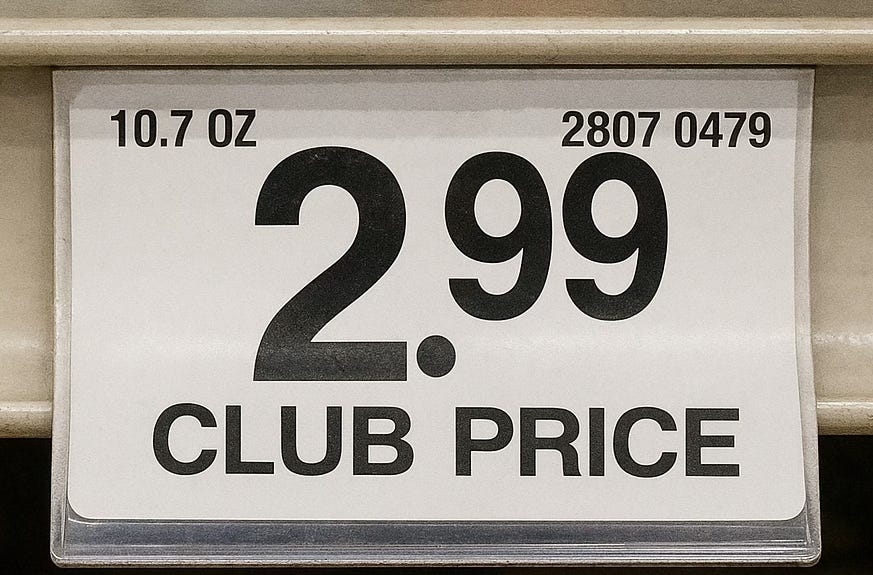
Twiddling is even being used in the grocery store. Some chains are now using computer-connected price tags on their shelves. Prices can be changed instantly if the algorithm decides to do it. This can make shopping a lot more challenging, since the price you pay for a can of beans may change between the time you took it off the shelf and when you arrived at the check stand.

Then there’s Google. You may not trust Google (My hand is up), so you use some other search engine. It doesn’t matter. Google still knows just about every single site you visit, thanks to tools they offer for free to web developers for tracking traffic and evaluating how well ads are working. So when you set out to find a USB-connected, WiFi-enabled backscratcher, you will suddenly find yourself getting ads for such a device on most of the sites you visit.
In olden times (early 90s) when you visited a web page, you could read it for the content. Now reading a page in just about any website means trying to find the content you came for, which is enmeshed in layers of advertising that is not related to the topic of the site. Even my daily Wordle game now requires me to view an ad before I can play. The author of this popular game deserved the huge payout he got from the New York Times, but I suspect the only reason it’s still free to play is because he made it a condition of the sale.
An argument could be made that this blizzard of ads on websites is no different from that ancient device called a “newspaper”, which was paid for mostly by advertising. The difference is that newspaper advertising was the same for every subscriber, and reading the paper did not collect any information from you to sell to advertisers.
Converting Customers to Subscribers
One of the features Apple brought into the world with the iPhone was the App Store. Ordinary folks, like me, could write software for this wondrous device and sell it through Apple. The terms were fairly simple. You developed your software using Apple computers, submitted it for review, and they would sell it for the price you set, or make it free. Most apps at the time were games, selling for less than $3.
In 2011 I wrote my first app for the iPhone for a very small audience of users that I was very familiar with. It sold for $7, outrageously high for the time. I hoped it would generate a bit of coffee money for a year or two. Fourteen years later, it’s still in the store, still $7, and selling a few each month. No, it did not get me a mansion on the Riviera, or even a down payment on a Buick Riviera.
Now software in general is sold in one of two ways. On mobile devices (phones and tablets) games are sold as free. The seller makes money through advertising that is built into the game. If you play for an hour, at least 20 minutes will be lost while you wait for the ads to finish running. Some have options that allow you to pay a fee to remove ads. Apps, primarily games, that are free of ads will be usable only to a certain point when you have to pay to get more ammunition, hints, or features to keep playing.
Apps that provide useful functions are now sold almost exclusively as subscription-based. You must subscribe in order to get a period of free trial. If you don’t cancel before the end of the trial, you will be billed on a recurrent basis.
This subscription model is no longer unique to mobile devices. For desktop and laptop computers, it’s the norm. For example, Microsoft products Word and Excel, two mainstays in most offices, were originally sold as separate products for a one-time payment. Later they were all bundled into a single expensive product called Microsoft Office. That has evolved into Microsoft 365, which is only available as a subscription. It’s run in the cloud, so you must have an Internet connection to use it. The price can change at any time, and you will have to pay to keep using it. Many other software tools have adopted this same model.
Enshitification in the Real World
The bulk of the book is centered on the Internet and all the services that rely on it. It points out how the original intent of the Internet was as a communication service built for fast, efficient transmission of information. The problems began when it became possible to use software to transform the World Wide Web into a global marketplace. The saying used to be “If you’re not paying for the product, you’re the product.” This has evolved to the point that even if you are paying for the product, you are still the product.

The enshitification process now extends into the physical world, in real life (IRL) as the acronym goes. It is now the norm for major appliances. Take my refrigerator (Please!) for example. We bought it 20 years ago when we moved into our current house. It’s a side-by-side freezer/refrigerator combo with ice and water in the door. We hate it.
The shelves are narrow, but deep. Things tend to migrate to the back, where they languish until they become lab experiments. The freezer has a tendency to to deliver something to the floor as soon as the door is opened. It’s never what you came for. Water is still available from the door, but the ice dispenser hasn’t worked in years. Every few weeks the ice bin turns into a glacier and it must be removed to melt the frozen block. We are now used to opening the door and grabbing ice from the bin.
So why not replace it? With inflation, a comparable model would cost about 3 times what we paid for this one. The new ones all have extra features, like a WiFi connection, in-door display, and more. Many of our friends and family have bought these new wonders. The results are shocking. Ice makers tend to fail in the first year. Exotic electronics fail as well. We have one neighbor who had so much trouble in the first year that the seller gave her back a portion of the purchase price.
The shoddy construction is not limited to refrigerators. My oldest son went through 3 washer/dryer combinations in a 4 year period. Each one failed due to an electronic circuit board that cost almost half the price of the combo to replace. Now, in the age of “big box” stores fighting each other for the lowest price, the products sold have very limited warranties, typically no more than a year. The stores sell extended warranties, which are pretty much mandatory if you want any warranty at all.
Why is this happening? Well consider that pretty much every family in the USA has appliances in their home that they use in every day living. The only time they don’t have appliances is when purchasing a new home that has none. The absurd housing bubble and soaring mortgage rates mean that young families just starting out have no chance at buying a house. This puts the manufacturers of appliances in a market that has few buyers.
The solution to this problem is to replace existing appliances. Make new ones that have many more features. Have as much as possible made offshore, where the cost of building something is set by what the manufacturer wants to pay. The result is shoddy goods that fail early and often. Failure is built into the product. And it’s not limited only to big ticket appliances.

This is the handle from a simple push broom, purchased at the local big box store. We’ve had it about 3 years, and it’s been used no more than 50 hours. Last weekend I was using it to sweep up the acorns dropped by our oak tree on the sidewalk in front of our house. There was a cracking sound and I found myself holding the handle, which was now separated from the broom. The end in the picture shows the plastic piece that screwed into the broom. The threaded bit is still in the brush part, broken away from the plastic piece riveted to the metal handle. Looking at the broken end, I can see small holes inside. I’m no mechanical engineer, but I suspect they made it weaker. More fodder for the landfill.

The World Economic Forum (WEF) has initiated a global plan called The Great Reset. You’ve probably seen the slogan: In the future you will own nothing, and you will be happy. Given that enshitification inherently funnels money from the general population to the oligarchs pulling the strings, that seems like a probable outcome. How can we escape this?
Cory Doctorow suggests the cure is through:
Competition
Regulation
Interoperability
Tech worker power
I’m very skeptical about this. Competition is nearly impossible when most markets are owned by 2 or 3 major players. Regulation requires governments to regulate industries that are simultaneously funding the legislators through campaign donations. Interoperability is also difficult, due to the DMCA and patents, which can be used to cripple those who attempt it. As for tech worker power, at the moment there are so so many tech workers, that are either unemployed or struggling to make ends meet in the gig economy, it seems doubtful they have much power.
The enshitification we are seeing everywhere didn’t happen overnight, but it was accelerated by the pandemic. I’ll do a future post with ideas on how to combat it. For now shop locally whenever possible. Tip delivery people generously in cash, minimally in apps. These folks talk, and word will get out that you are a good customer.
Quit Facebook, Twitter/X, and the like. Yes that means leaving all your friends behind, unless you can convince them to go as well. And yes, I’m aware of the irony of me posting this on a platform that is in the process of becoming a social media platform. The enshitification of Substack has already begun.
Instead of buying poorly made goods, check out resale shops as well as Goodwill and similar stores. Read reviews before buying anything, but ignore all but the 3-star reviews. The 4 and 5 star are easily faked. the 1 and 2 star are often used in the hope of punishing the business. The 3-star reviews are usually honest, and often reveal shortcomings that might lead to a nasty surprise later.
I’ve only touched lightly on the 352 pages of Cory Doctorow’s latest book. It’s affordably priced and I would encourage you to read it. He’s trying to prevent us from losing all the good that the Internet used to provide. Wish him luck and buy the book.
Another example would be online education. That school you saw the charming ads for? It's actually owned by a school management corporation. I lived this procession as an online teacher. It was good in the beginning.
I hope one answer lies with fixing things. I use things far beyond their natural lives. Mending, darning, cleaning appliances of the gunk that prevents them from moving / sucking up dust / doing their appointed tasks - old fashioned maintenance instead of “throw it away and get a new one”. Makes my husband crazy though I do point out that he is a direct beneficiary of this philosophy, having been married to me for 38 years. The Maker movement is a great manifestation, too: make more yourself. Ifixit.com has a “repair manifesto” that’s worth reading!